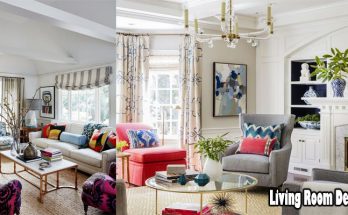


Living in a compact home often feels like a constant negotiation with square footage. We want a cozy place to binge-watch our favorite series, a professional backdrop for video calls, and a welcoming spot for a Sunday brunch—all within the same four walls. In 2026, as urban living becomes more streamlined and remote work remains a staple, the “traditional” living room is officially dead. It has been replaced by the Multi-Functional Hub.
The secret to making a small room feel expansive isn’t about having fewer things; it’s about zoning. By treats your living room as a collection of “neighborhoods” rather than one big block of space, you unlock its true potential. Here is how to design a multi-functional living room using the power of zones.
1. The Psychology of Zoning: Why It Works
When a single room is used for sleeping, eating, and working without any visual boundaries, your brain struggles to switch gears. You might feel the urge to check emails while watching a movie or feel restless while trying to focus.
Zoning creates mental triggers. When you cross from the “Work Zone” to the “Relaxation Zone,” your brain acknowledges a shift in activity. This doesn’t require building walls; it requires visual cues that tell a story of purpose.
2. Defining Your Zones
Before moving furniture, list your “Non-Negotiables.” Most modern multi-functional rooms require three primary zones:
- The Social/Relax Zone: Sofa, TV, coffee table.
- The Productivity Zone: Desk, ergonomic chair, lighting.
- The Dining/Flex Zone: A spot for meals that can double as a hobby station.
3. Visual Dividers: Walls Without the Construction
The biggest mistake in small-space design is pushing all the furniture against the walls, creating a “waiting room” effect. Instead, use these tools to create invisible boundaries:
The Magic of Area Rugs
Rugs are the most effective way to “anchor” a zone. A large jute rug under the sofa and coffee table defines the living area. A smaller, distinct rug under the desk defines the office. When your feet move from carpet to hardwood to a different rug, your brain registers that you have entered a “new” room.
Open Shelving as a Peninsula
A “see-through” bookshelf (like the IKEA Kallax or a custom minimalist metal frame) placed perpendicular to the wall acts as a room divider without blocking light. It provides storage for both zones while maintaining an airy, open feel.
Lighting as a Boundary
In 2026, smart lighting is a designer’s best friend. Use warm, dimmable lamps in the relaxation zone and cool-toned, focused task lighting in the work zone. By turning off the “office” lights and dimming the “living” lights, the work area effectively disappears in the evening.
4. The Power of “Transformer” Furniture
In a small space, every piece of furniture must “earn” its keep. If a piece only does one thing, it’s taking up too much room.
- The Murphy Desk: A wall-mounted desk that folds up when the workday is over. This “closes the office” physically and mentally.
- Storage Ottomans: Swap a traditional coffee table for two large upholstered ottomans. They serve as a table (with a tray), extra seating for guests, and hidden storage for blankets or files.
- Extendable Console Tables: A thin table behind the sofa can serve as a display for plants during the day and expand into a dining table for four at night.
5. Utilizing Vertical Real Estate
When you run out of floor space, look up. Beginners often forget that the top half of a room is usually empty.
- Wall-Mounted Everything: From bike racks to floating nightstands, getting items off the floor makes a room feel 20% larger instantly.
- High Curtains: Hang your curtain rods as close to the ceiling as possible. This draws the eye upward, creating an illusion of height that compensates for the narrow floor plan.
6. Color Theory for Multi-Zoning
You don’t need to paint every wall a different color to zone. Instead, use a Tone-on-Tone approach.
- Keep the overall room a neutral “gallery white” or soft beige.
- Use a specific accent color for each zone. Perhaps the “Work Zone” has navy blue accents (associated with focus), while the “Relax Zone” uses soft greens and woods (associated with calm).
7. Managing the “Visual Noise”
The enemy of a small, multi-functional room is clutter. If your desk is covered in papers and it’s three feet from your sofa, you’ll never truly relax.
- Cable Management: Use sleeves and boxes to hide every single cord. Visible wires are “visual friction” that make a space feel cramped.
- Uniform Storage: Use identical baskets or bins on open shelving. This creates a “texture” rather than a “mess.”
8. Case Study: The 300sq ft Success
Imagine a studio apartment. By placing the sofa in the center of the room (back-to-back with a slim desk), the room is split into two distinct halves. The “back” of the sofa acts as a wall for the office. A tall potted plant in the corner softens the transition. At 6 PM, the worker shuts their laptop, walks around the sofa, and “enters” the living room. The physical act of moving around the furniture provides the transition that a commute used to provide.
Small is a Superpower
Designing a small space isn’t about compromise; it’s about curation. When you are forced to choose only the best pieces and organize them into intentional zones, you end up with a home that is more functional and stylish than many sprawling mansions. Your living room can be a cinema, an office, and a dining hall—you just have to draw the lines.
Your Design Checklist:
- Measure twice: Every inch counts in a multi-functional layout.
- Pick your anchor: Start with the rug for your largest zone.
- Go vertical: Install floating shelves before buying another floor cabinet.
- Hide the tech: Ensure your work-from-home gear can be tucked away or blended in.